
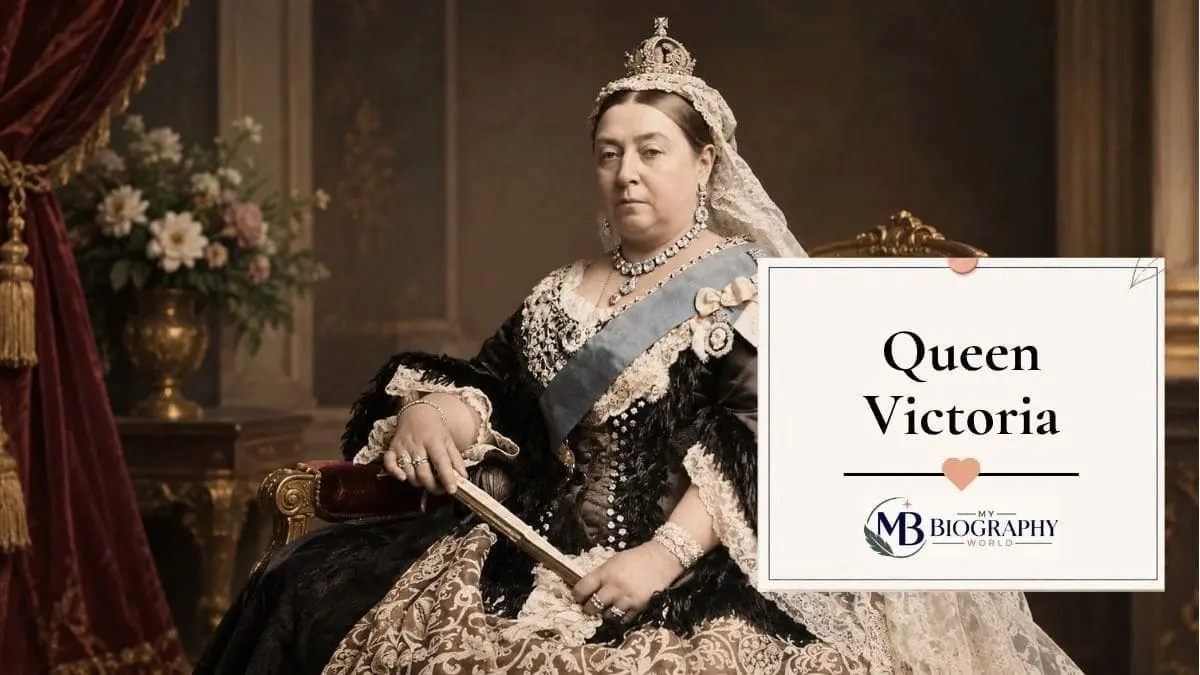
Who Was Queen Victoria? Age, Reign, Family & Biography
Queen Victoria was a prominent queen of Britain, who ruled the United Kingdom from 1837 until 1901. At age 18, she was crowned queen and ruled a nation that was experiencing great growth in industry, politics, and around the world. Her long rule made a mark on British history and established the period of British Time to be the Victorian Era.
Quick Information Table
| Category | Details |
| Full Name | Alexandrina Victoria |
| Date of Birth | May 24, 1819 |
| Date of Death | January 22, 1901 |
| Age at Death | 81 years old |
| Birthplace | Kensington Palace, London, England |
| Nationality | British |
| Profession | Queen of the United Kingdom |
| Reign | June 20, 1837 – January 22, 1901 |
| Known For | Second-longest reigning British monarch at the time |
| Husband | Prince Albert of Saxe-Coburg and Gotha |
| Children | 9 children |
| Era | Victorian Era |
Early Life & Family Background
Victoria was born at Kensington Palace, London on 24th May 1819. She was the sole daughter of Prince Edward, Duke of Kent and Princess Victoria of Saxe-Coburg-Saalfeld. Victoria was raised by her mother, who was extremely strict with her.
Victoria was raised in a system of control instituted at her mother’s and Sir John Conroy’s instigation, the Kensington System. Their goal was to maintain Victoria’s dependence and protect her, but it also severely limited her childhood capabilities.
These difficulties did not deter Victoria, and her personality strengthened and she made it her goal to rule independently.
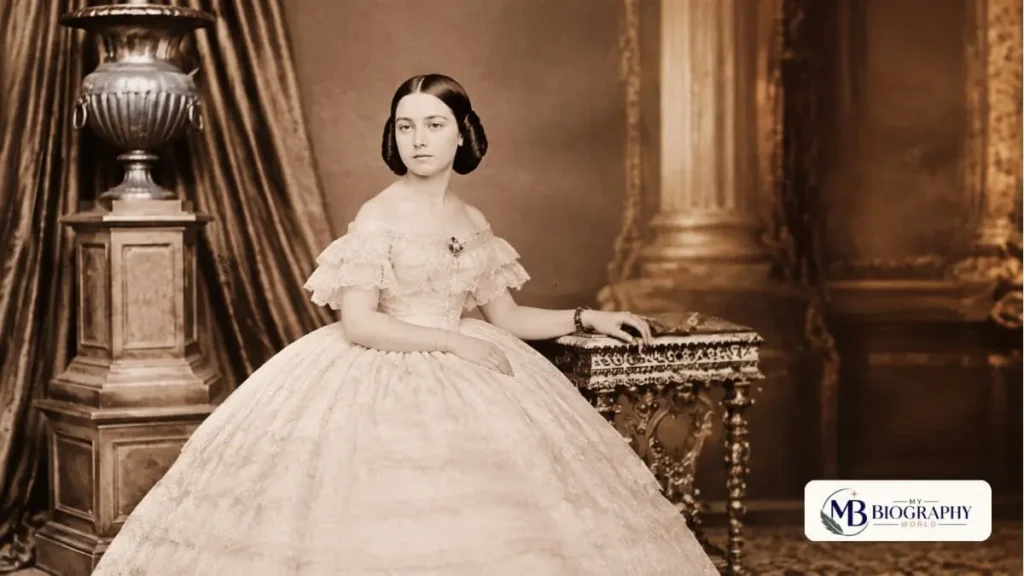
Young Queen Victoria
It was taken to the British throne by Victoria after the deaths of various Royal heirs. On June 20th, 1837, King William IV passed away, and Queen Victoria ascended the throne aged 18. Her youth brought attention to herself, appropriately, as Britain was going through vast transformations.
Victoria had start over:
- Constitutional responsibilities
- Political decision-making
- Royal diplomacy
- Public leadership
Experienced counsellors helped her to slowly realize she was a strong and respected Monarch.
Queen Victoria’s Reign
Queen Victoria ruled for more than 63 years, making her reign one of the longest in British history at the time. Her period of leadership became known as the Victorian Era. During her reign, Britain experienced significant developments in:
- Industry
- Science
- Transportation
- Trade
- The British Empire
- Culture
Important events during Queen Victoria’s reign included:
Industrial Growth
Britain became one of the world’s leading industrial powers during the Victorian period. Major developments included:
- Expansion of railways
- Growth of factories
- Advances in engineering
- Increased global trade
Expansion of the British Empire
The British Empire grew much during Victoria’s reign. By the end of the 19th century British Empire had its empire in various parts of the world. This time period created ripples in Britain’s international presence as well as debates surrounding the nature of colonialism and its impact.
Social and Political Changes
The Victorian Era saw important reforms, including:
- Changes in voting rights
- Education improvements
- Public health reforms
- Labor protections
Victoria’s reign reflected a period of both progress and social challenges.
Queen Victoria and Prince Albert
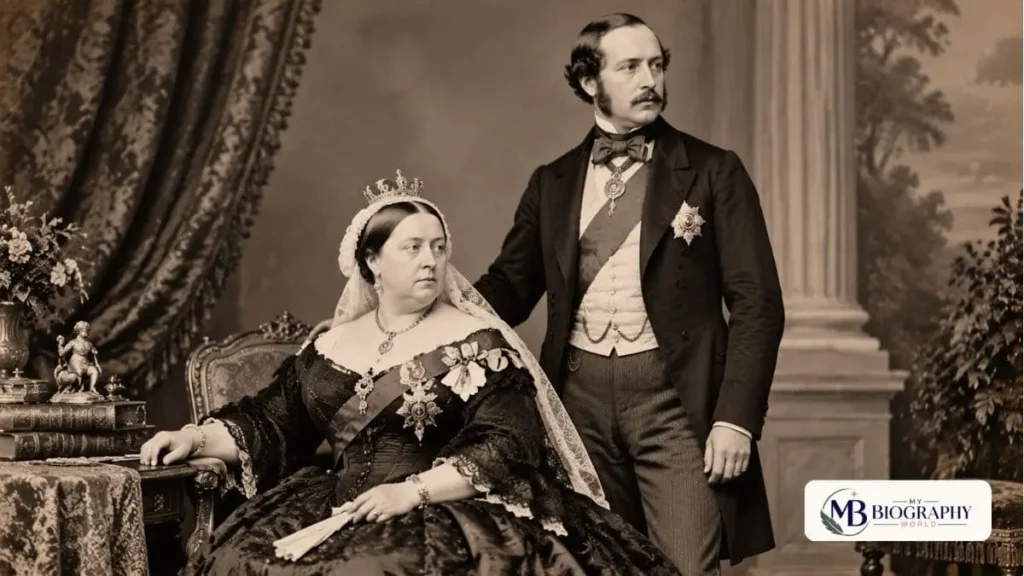
Queen Victoria married Prince Albert of Saxe-Coburg and Gotha on February 10, 1840. Their relationship became one of the most famous royal partnerships in history. Albert played an important role in Victoria’s life and supported many cultural and educational projects. Together, they had nine children. Their marriage influenced royal traditions and helped shape the public image of the British monarchy.
Queen Victoria Children
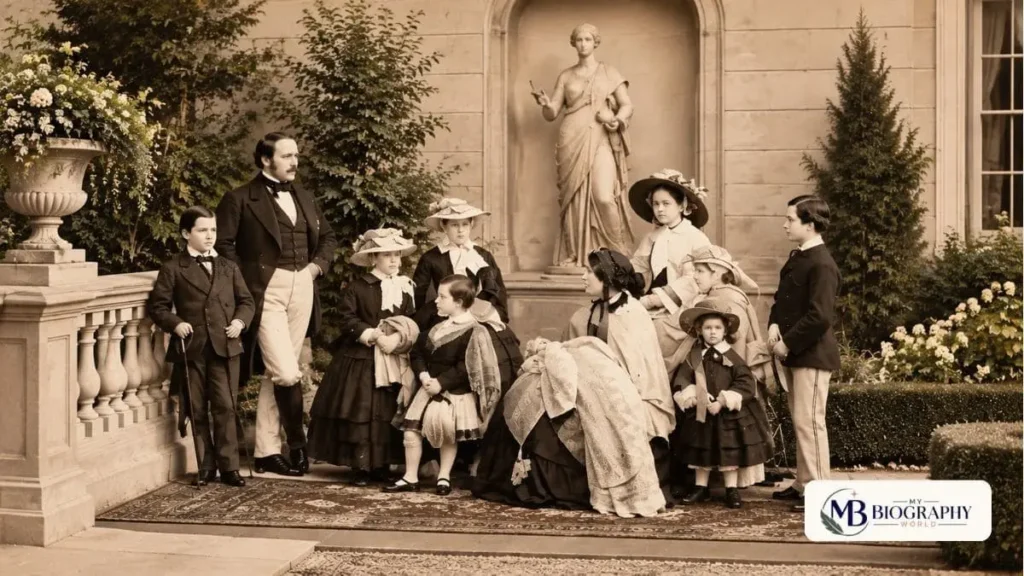
Queen Victoria and Prince Albert had four sons and five daughters.
Their children were:
| Child | Birth Year | Known For |
| Victoria, Princess Royal | 1840 | Became German Empress |
| Edward VII | 1841 | Became King of Britain |
| Princess Alice | 1843 | Member of European royal families |
| Prince Alfred | 1844 | Duke of Saxe-Coburg and Gotha |
| Princess Helena | 1846 | Supported charitable causes |
| Princess Louise | 1848 | Artist and royal figure |
| Prince Arthur | 1850 | Duke of Connaught |
| Prince Leopold | 1853 | Duke of Albany |
| Princess Beatrice | 1857 | Queen Victoria’s youngest child |
Queen Victoria Family Tree
Queen Victoria’s family had many family ties around Europe through marriage.
Her descendants were monarchs and royal families of:
- United Kingdom
- Germany
- Russia
- Spain
- Greece
Victoria was known as the “Grandmother of Europe,” because she had many cousins among the rulers of the various countries in Europe.
Her descendants included:
- King George V
- Kaiser Wilhelm II
- The noble families in Europe were numerous.
Queen Victoria’s Husband: Prince Albert
Prince Albert was not only Victoria’s husband but also an important adviser.
He supported:
- Education
- Science
- Arts
- Technology
- Cultural development
One of his most famous achievements was helping organize the Great Exhibition of 1851, which showcased industrial and technological achievements from around the world.
Queen Victoria Personal Life
Queen Victoria had a strong emotional connection with her family. After Prince Albert died in 1861, Victoria entered a long period of mourning. His death affected her deeply, and she continued wearing black clothing for many years. Later in life, Victoria became a symbol of stability and tradition.
She maintained a close relationship with her children and grandchildren, although royal family relationships sometimes faced disagreements.
Queen Victoria’s Major Achievements
Queen Victoria did not govern Britain in the same way an elected prime minister did, but her long reign made her one of the most important symbols of 19th-century Britain.
Some of the major developments associated with the Victorian Era include:
- She reigned for more than 63 years, from 1837 to 1901.
- Britain experienced major industrial and technological growth during her reign.
- Railways and communication networks expanded rapidly.
- The British Empire grew significantly during the Victorian period.
- She became Empress of India in 1876.
- The monarchy developed a stronger public and family-centered image.
- Her children and grandchildren connected the British royal family with royal houses across Europe.
Victoria celebrated her Golden Jubilee in 1887 and Diamond Jubilee in 1897, marking 50 and 60 years on the throne.
Queen Victoria Age, Height & Personal Details
Queen Victoria lived to the age of 81, which was a long life for her period.
| Information | Details |
| Age at Death | 81 years |
| Height | Commonly reported at around 5 feet (152 cm) |
| Date of Birth | May 24, 1819 |
| Date of Death | January 22, 1901 |
| Husband | Prince Albert |
| Children | 9 |
| Hair Color | Brown in youth |
| Eye Color | Blue |
| Reign | 1837–1901 |
Historical reports about physical details such as height can vary, so measurements should be treated as approximate rather than exact.
How Tall Was Queen Victoria?
Queen Victoria is commonly reported to have been approximately 5 feet (152 cm) tall.
Her physical height, however, had little connection to the powerful public image she developed during her reign. By the end of the 19th century, Victoria had become one of the world’s most recognizable royal figures.
How Old Was Queen Victoria When She Became Queen?
Queen Victoria was 18 years old when she became queen on June 20, 1837, following the death of her uncle, King William IV. Her coronation took place at Westminster Abbey on June 28, 1838. Victoria remained on the throne until her death in 1901.
Queen Victoria Net Worth and Royal Wealth
Unfortunately it is difficult to give a contemporary estimate of the net worth of Queen Victoria and any such estimate can be misleading. King’s money didn’t just come from money; Victoria’s money included money, royal revenues, property and assets of the Crown. Historical money cannot be correlated with the current money value, without taking into account inflation and variation in money ownership.
For this reason no certain net worth figure can be presented today as the amount of Queen Victoria’s wealth confirmed, to the advantage of this lady. Her estate consisted of private property and estates that belonged to the Royal family in addition to her royal income.
The Death of Prince Albert and Victoria’s Mourning
Prince Albert died 14 December 1861 aged 42. Victoria was completely transformed in her private and public lives by his death. She went through a long period of mourning, avoiding numerous public events, and became highly identified with black child’s shirts.
Her public visibility was initially criticized, but Victoria slowly tumbled back into public service. Her popularity was renewed again in her older age as she became an icon of continuity and of the monarchy.
Queen Victoria’s Later Years
Victoria’s reign spanned the late Victorian era, when the British Empire and nation were undergoing many changes.
Her service organization included many British Prime Ministers such as Lord Melbourne, Robert Peel, Benjamin Disraeli and William Gladstone.
Britain was a constitutional monarchy with the political policy decided by elected politicians, but Victoria was still concerned with politics and had regular correspondence with her ministers.
But her Golden and Diamond Jubilees also revealed the extent to which her identity had become intertwined with the Victorian itself.
When and How Did Queen Victoria Die?
Queen Victoria died on January 22, 1901, at Osborne House on the Isle of Wight. She was 81 years old.
Her death brought her 63-year reign to an end.
Her eldest son, Albert Edward, succeeded her as King Edward VII, beginning the Edwardian era.
Victoria was buried beside Prince Albert in the Royal Mausoleum at Frogmore, near Windsor.
Queen Victoria’s Legacy
This happened because Queen Victoria’s name became a legacy that was used to describe a large part of British history – The Victorian Era.
She reigned during a tremendous era of revolution in industry, science, transportation, politics, urbanism, communication and Britain’s international status.
Yet her groundbreaking legacy is complicated, though. Technological and social development occurred during the Victorian period, but also the time of imperialism, colonialism, inequality and unsuitable working and living conditions for many.
The knowledge of both sides allows us to have a clearer understanding of the world in which Victoria reigned.
She is still discernible in:
- Victorian architecture
- Literature and art
- Royal traditions
- European royal family connections
- Museums and historical collections
- Buildings, places, and monuments bearing her name
Queen Victoria: Young Monarch vs Later Reign
| Young Queen Victoria | Queen Victoria in Later Life |
| Became queen at 18 | Became Britain’s longest-reigning monarch of her time |
| Relatively inexperienced monarch | More than six decades of royal experience |
| Unmarried when she took the throne | Mother of nine children |
| Worked closely with Lord Melbourne | Worked with generations of prime ministers |
| Beginning of Victorian reign | Symbol of the Victorian Era |
Interesting Facts About Queen Victoria
- Her full birth name was Alexandrina Victoria.
- She became queen when she was only 18 years old.
- Victoria married her first cousin, Prince Albert, in 1840.
- Victoria and Albert had nine children.
- Her descendants married into several European royal families.
- She became known as the “Grandmother of Europe.”
- Prince Albert’s death in 1861 deeply affected her.
- Victoria became Empress of India in 1876.
- Her Diamond Jubilee was celebrated in 1897.
- Her reign lasted 63 years, seven months and two days.
Key Takeaway
Queen Victoria ruled the United Kingdom from 1837 to 1901 and gave her name to the Victorian Era. She became queen at 18, married Prince Albert, had nine children, and reigned for more than 63 years. Her period on the throne saw major industrial, social, political, and imperial changes that continue to shape how historians study 19th-century Britain.
FAQs About Queen Victoria
Who was Queen Victoria?
Queen Victoria was the Queen of the United Kingdom from 1837 until her death in 1901. Her 63-year reign became known as the Victorian Era.
How many children did Queen Victoria have?
Queen Victoria and Prince Albert had nine children: four sons and five daughters.
Who did Queen Victoria marry?
Queen Victoria married her first cousin, Prince Albert of Saxe-Coburg and Gotha, on February 10, 1840.
Who was Queen Victoria’s husband?
Queen Victoria’s husband was Prince Albert. They remained married until his death in 1861
How old was Queen Victoria when she became queen?
Victoria was 18 years old when she became queen on June 20, 1837.
How tall was Queen Victoria?
Queen Victoria is commonly reported to have been around 5 feet (152 cm) tall, although historical measurements can vary.
How many grandchildren did Queen Victoria have?
Queen Victoria and Prince Albert had 42 grandchildren, many of whom became connected with royal families across Europe.
Who succeeded Queen Victoria?
Her eldest son succeeded her as King Edward VII after Victoria died in 1901.
How long did Queen Victoria reign?
Queen Victoria reigned for 63 years, seven months and two days, from June 20, 1837, to January 22, 1901.
Why is Queen Victoria famous?
Queen Victoria is famous for her exceptionally long reign and for giving her name to the Victorian Era, a period associated with major industrial, social, cultural, and imperial change.
Conclusion
From being an 18 year old queen, Victoria became one of the most renowned British rulers of all time. Her 63 years in rule spanned so much change in industrial, political, cultural and imperial history that it became known the world over as the Victorian Era.
Queen Victoria’s legacy, children and family tree, marriage to Prince Albert and her relationship to European royalty are all popular topics for her biography, over a hundred years after her death, due to these factors.
Interested in learning more about individuals who influenced history? Discover My Biography World which offers detailed biographies, outstanding life stories and the accomplishments of some of the most popular people in history.