
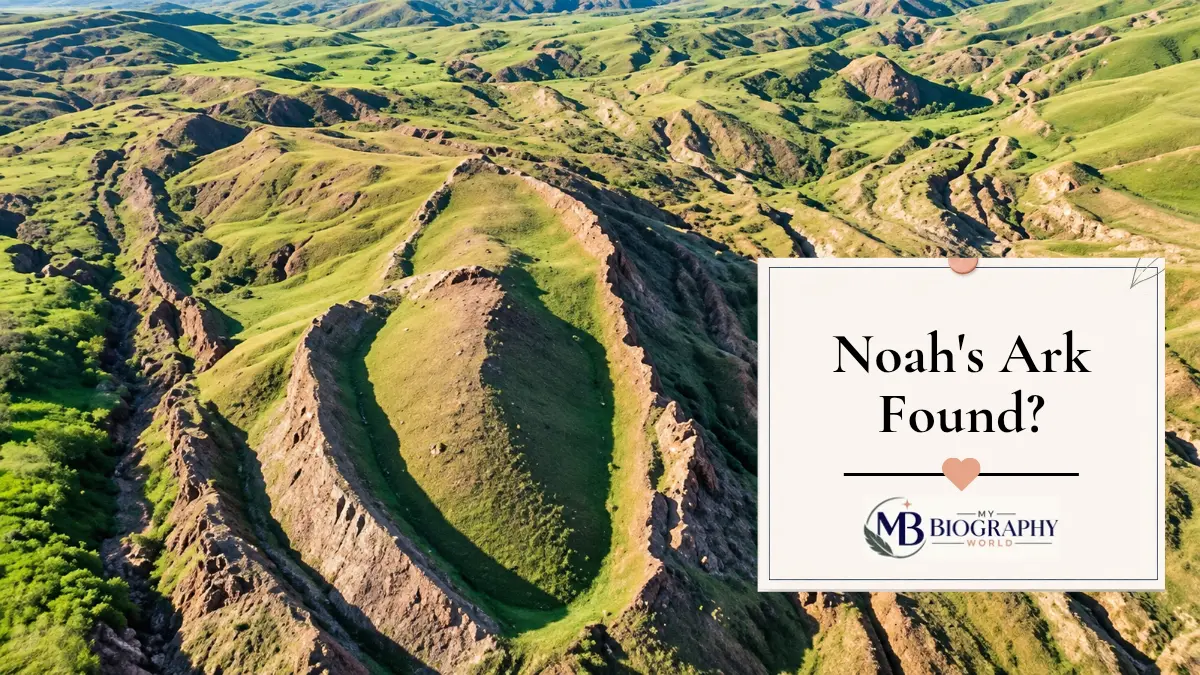
Noah’s Ark Found? What the Evidence From Turkey Really Shows
The question “noah’s ark found” continues to attract attention because researchers are still investigating a remarkable boat-shaped formation in eastern Turkey. The site, known as the Durupınar formation, is located near Doğubayazıt in Ağrı Province, south of Mount Ararat. A formally authorized research project began investigating the formation in 2026 using techniques including ground-penetrating radar, electrical resistivity tomography, LiDAR, geological analysis and core sampling. However, the current research does not establish that Noah’s Ark has been discovered. Researchers themselves describe the evidence as requiring further geological and geophysical verification.
Quick Facts About the Noah’s Ark Discovery
| Fact | Current Information |
| Subject | Noah’s Ark |
| Main search region | Eastern Turkey |
| Famous suspected site | Durupınar formation |
| Nearby major landmark | Mount Ararat |
| Formation identified | 1959 |
| Identifying figure | İlhan Durupınar |
| Approximate formation length | 157 metres / 515 feet |
| Current research | Active scientific investigation |
| Main methods | GPR, ERT, LiDAR, core sampling |
| Confirmed archaeological discovery? | No |
| Confirmed remains of Noah’s Ark? | No |
| Current status | Investigation continues |
Has Noah’s Ark Been Found?
The straightforward answer to “has Noah’s ark been found” is no—not in a way that has been scientifically established. There is currently no universally accepted archaeological discovery consisting of a preserved wooden vessel, identifiable construction components, datable timber, or other independently verified material that can be demonstrated to be Noah’s Ark. This distinction matters because headlines and social-media posts sometimes use “found” to describe the identification of an unusual geological structure or the detection of subsurface anomalies rather than the archaeological confirmation of an ancient ship. National Geographic has likewise described modern Ark claims as disputed and notes that the Durupınar site is regarded by many researchers as a natural geological formation.
At the same time, the story has not simply disappeared. A 2026 research project directed by Prof. Dr. Cenker Atila of Sivas Cumhuriyet University and conducted with Noah’s Ark Scans is examining the Durupınar formation under official authorization from Turkish authorities. The project’s published methodology emphasizes non-invasive geophysical investigation rather than announcing a completed archaeological discovery. According to the project documentation, researchers are studying unusual subsurface structures and organic-material differences while explicitly stating that the available data is suggestive rather than conclusive.
That is why the most accurate description today is not “Noah’s Ark has been proven to be found,” but rather a long-standing candidate site is undergoing renewed scientific investigation. The distinction may sound technical, but it is the difference between evidence that justifies further research and evidence that establishes an identification.
What the Bible Says About the Ark’s Location
The location question begins with the ancient text itself. In the Book of Genesis, Noah’s Ark is described as coming to rest on the “mountains of Ararat.” The wording is important because it does not necessarily identify the modern, single volcanic peak called Mount Ararat. Instead, “Ararat” can be understood in connection with a broader geographical region associated with ancient Urartu. This ambiguity is one reason researchers and religious traditions have proposed more than one possible location over the centuries.
Modern searches often focus on Mount Ararat because the mountain has become deeply associated with the Ark in popular culture, religious tradition and exploration history. Yet there is an important geographical complication: the biblical wording refers to a mountainous region rather than explicitly saying that the Ark landed on the summit or slopes of today’s Mount Ararat. National Geographic similarly points out that Genesis describes the Ark as coming to rest in an unidentified range of mountains in western Asia.
Islamic tradition introduces another geographical name into the discussion. The Qur’an, in Surah Hud 11:44, refers to the Ark coming to rest on al-Judi. Some researchers therefore distinguish between the Mount Ararat tradition associated with Genesis and the Mount Judi tradition associated with the Qur’an. This makes the phrase “Noah’s Ark location” much more complicated than simply pointing to one mountain on a modern map.
Why Mount Ararat Became the Main Search Area
Mount Ararat became the center of numerous Ark expeditions because of its connection with the biblical “mountains of Ararat” and because the mountain dominates the landscape of eastern Turkey. Over the centuries, explorers, religious investigators and adventurers have reported possible pieces of wood, unusual formations and visual anomalies in the region. One historical example cited by National Geographic is British explorer James Bryce, who climbed Mount Ararat in 1876 and claimed to have recovered a piece of wood that he believed could have been associated with the Ark.
Those reports generated a cycle that continues today: an unusual object is identified, researchers propose an interpretation, expeditions investigate it, and other researchers challenge the evidence. Some reported materials have turned out to be difficult to date or identify, while other claims have not survived independent examination. A 1977 article in The Biblical Archaeologist, for example, examined reported wood from “Mount Ararat” and discussed attempts to determine whether the material could actually be connected to Noah’s Ark.
History therefore shows why extraordinary claims need unusually strong evidence. Finding old wood on or near a mountain is not automatically equivalent to finding the Ark. To establish such a conclusion archaeologically, researchers would need a clear chain of evidence connecting the material to a specific ancient human-made vessel.
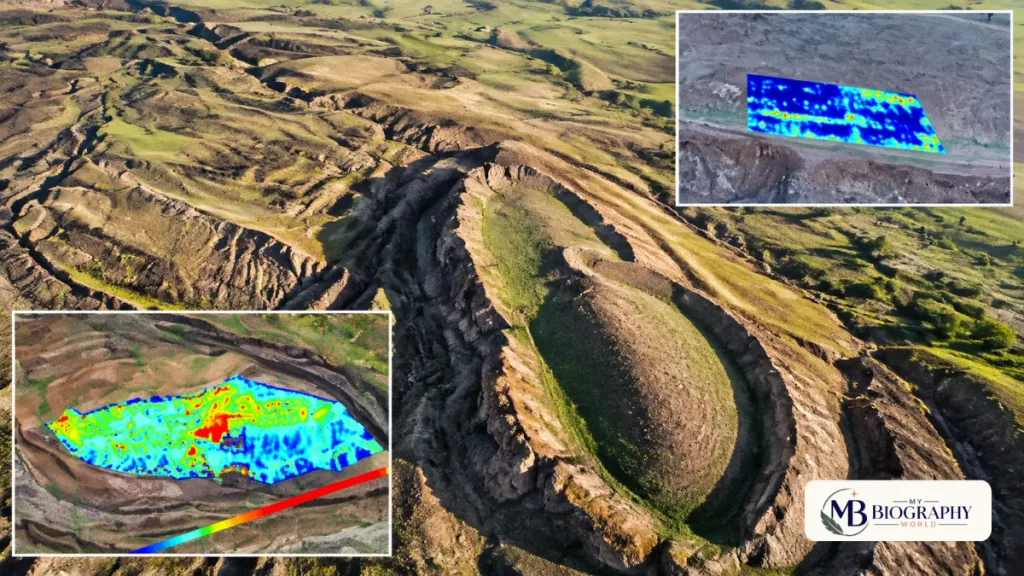
Noah’s Ark Found in Turkey: The Durupınar Formation
The most prominent modern Noah’s Ark found in Turkey’s story centers on the Durupınar formation. The structure was identified in aerial reconnaissance photographs in 1959 by Turkish Army Captain İlhan Durupınar. It appeared remarkably similar to the outline of a large ship, which immediately attracted attention because of the region’s association with the Ark. According to the current research project’s documentation, the formation measures approximately 157 metres, or about 515 feet, and lies in the Doğubayazıt district of Ağrı Province.
The site’s shape is one reason the debate has lasted so long. A long, narrow formation with what appears to be a pointed end naturally invites comparison with a boat. Supporters of the Ark interpretation have also pointed to dimensions that they believe resemble the biblical description of the vessel. Critics, however, argue that resemblance in shape does not establish human construction, particularly when the surrounding geology can produce unusual landforms.
This is the central scientific question surrounding Durupınar: Is the structure an ancient man-made object, or is its boat-like appearance the result of geological processes? The current research project is designed, at least in part, to investigate precisely that question rather than assuming the answer beforehand.
How the Boat-Shaped Formation Was Identified
The Durupınar story began with aerial imagery rather than an excavation. In 1959, İlhan Durupınar noticed the unusual shape while examining aerial photographs of eastern Turkey. The discovery subsequently attracted expeditions and researchers who attempted to examine the formation on the ground. Historical accounts describe the formation as approximately 500 feet long and roughly 150 feet wide, although measurements and descriptions have varied across different investigations.
One important detail is that the site was not simply accepted as an archaeological artifact when investigators first visited it. Early examination raised geological questions, and researchers debated whether the formation was natural. A later scientific investigation published in the Journal of Geoscience Education concluded that the feature was a natural geological structure rather than the remains of a ship. A detailed geological critique likewise identified the structure as a natural formation associated with sedimentary layers and geological deformation.
That disagreement is still central to the modern debate. Supporters of further investigation argue that newer instruments can examine the subsurface more effectively than some earlier surveys. Skeptics counter that detecting geometric patterns or unusual material underground does not automatically establish that humans constructed those features thousands of years ago.
What Researchers Have Found Beneath the Surface
The renewed investigation has attracted attention because researchers report anomalies beneath the Durupınar formation. The Noah’s Ark Scans research documentation says that ground-penetrating radar surveys conducted in 2014, 2019 and 2021 identified unusual linear structures and right-angle patterns. A 2023 analysis of the 2019 radar data reportedly mapped corridor- and room-like features extending through parts of the formation.
Researchers also report that 2024 soil testing found significantly more organic material in samples taken from inside the structure than in samples from outside it. The project’s documentation describes the difference as nearly three times as much organic material in the interior samples. Importantly, the researchers do not present this measurement as proof that the material came from Noah’s Ark. Instead, they say the findings justify additional geological and geophysical work to distinguish between natural and potentially human-made explanations.
This distinction is essential when evaluating evidence of Noah’s Ark. Organic material can occur naturally in geological environments, and a radar image showing a geometric anomaly is not itself an archaeological artifact. To transform these observations into evidence for an ancient ship, researchers would need to demonstrate that the anomalies represent deliberate human construction and establish an appropriate age and archaeological context.
Evidence of Noah’s Ark: What Has Actually Been Reported?
Claims about evidence of Noah’s Ark generally fall into several categories: the shape and dimensions of the Durupınar formation, alleged subsurface structures, organic material, historical reports of wood, and interpretations of geological or mineral samples. Some of these observations are genuine measurements or samples; the controversy concerns what they mean. A scientific observation and an interpretation of that observation are not the same thing.
For example, the formation really does have a striking boat-like appearance. Researchers have conducted radar and other geophysical surveys at the site. Soil samples really have been collected and analyzed. But none of those facts, individually or collectively as currently published, establishes that the formation is the biblical Ark. The official research project itself states that its purpose is geological investigation and that its findings do not authenticate historical or religious claims.
This is also why old photographs can be misleading when presented without context. A dramatic aerial image may look convincing, but geology frequently produces symmetrical or elongated structures. The relevant scientific question is not simply whether something looks like a ship. It is whether independent evidence demonstrates that people constructed it.
Ground-Penetrating Radar and Geological Surveys
Ground-penetrating radar, or GPR, is one of the main technologies involved in the modern investigation. The technique can detect changes in subsurface electrical properties and produce images that help researchers understand structures beneath the ground. Electrical resistivity tomography, or ERT, provides another way to map variations in the subsurface. LiDAR and topographic mapping can then contribute information about the shape of the surface itself.
The 2026 project combines these methods with core drilling and chemical analysis. Its stated goal is to build a more complete subsurface picture of the Durupınar formation while minimizing physical disturbance. This approach is significantly different from simply announcing that an object has been found based on an aerial photograph.
Still, geophysical imaging has limitations. A radar anomaly can indicate a boundary, change in material or structural feature, but the image alone may not tell researchers whether the cause is wood, stone, compacted sediment, a geological fracture or another natural feature. That is why researchers need samples, geological interpretation and independent verification before turning an anomaly into an archaeological conclusion.
Organic Material and Subsurface Anomalies
Organic material is another major part of recent discussion. The current research team reports that soil collected from within the Durupınar structure contained considerably more organic matter than samples taken outside it. This is an interesting observation, but it requires careful interpretation. Organic material is not synonymous with ancient timber, and even genuine ancient wood would still need dating and contextual analysis before it could be linked to Noah’s Ark.
The same principle applies to reported right angles and corridor-like structures. If these features ultimately prove to be human-made, that would substantially change the archaeological discussion. If they can be explained through geological layering, erosion or deformation, their relevance to the Ark hypothesis would be much weaker.
The research remains ongoing precisely because the available evidence has not settled this question. The official project description says that both a naturally explainable geological origin and a possible man-made origin require further verification. That wording is important because it prevents preliminary findings from being mistaken for a final archaeological identification.
Noah’s Ark Found Google Earth Claims Explained
Searches for “noah’s ark found google earth” often refer to satellite imagery showing the Durupınar formation or other unusual shapes in the mountains of eastern Turkey. Google Earth and other satellite-imaging platforms have made it dramatically easier for ordinary users to examine remote terrain from a computer. That accessibility has helped spread interest in the site, but satellite imagery cannot by itself prove what lies beneath the surface.
A satellite photograph can show the shape, location and surrounding landscape of a suspected site. It cannot normally establish whether a buried structure is made of wood, stone or compacted sediment. It also cannot independently establish the archaeological age of a feature. Those questions require ground investigation, geological sampling, laboratory analysis and archaeological context.
This is why a Google Earth image showing a boat-like outline should be treated as a visual clue, not proof. The Durupınar formation is already known and has been investigated on the ground for decades. The important question now is what the combined geological and geophysical evidence can establish about its origin. The current project uses much more than satellite imagery, including GPR, ERT, LiDAR and core sampling.
Mount Ararat Noah’s Ark Searches and Historical Expeditions
The phrase mount ararat noah’s ark combines two subjects that have been connected for generations: the biblical mountains of Ararat and the modern Turkish mountain known as Mount Ararat. Numerous expeditions have attempted to identify physical remains in the region. Some investigators have reported wood, unusual rock formations or other potential clues, while geological and archaeological assessments have challenged several of those interpretations.
A historical review published by the Geoscience Research Institute describes repeated expeditions to Mount Ararat and surrounding areas during the twentieth century. It notes that some reported wood from the mountain was later dated to the first millennium CE rather than to the period traditionally associated with Noah. The same review also discusses the Durupınar formation and the continuing debate over whether it represented an Ark-related site or a natural geological feature.
This history demonstrates why the Ark search has remained controversial. A discovery needs to survive testing by people who are not committed to a particular conclusion. The most persuasive archaeological evidence would need to be independently examined, dated using appropriate methods and placed within a defensible historical and geological context.
Noah’s Ark Remains: Natural Formation or Ancient Vessel?
The biggest question about the noah’s ark remains reported in Turkey is whether they actually remain at all. Geological investigations have produced a strong alternative explanation for the Durupınar formation. A peer-reviewed geological study by Lorence Collins and David Fasold argued that the structure was a natural geological formation and that features interpreted by some investigators as metal brackets or wooden components could instead be explained by naturally occurring minerals and altered rock.
That finding is significant because archaeology cannot identify an object solely from its outline. Ancient ships can decay, collapse, become buried and undergo chemical changes, but the resulting evidence still needs to be distinguishable from natural geology. If the proposed “walls,” “rooms” or “metal components” can be fully explained by natural geological processes, they cannot independently establish the existence of a ship.
At the same time, the modern research project argues that new data deserves examination rather than being dismissed before testing is complete. Its researchers are using current geophysical tools to investigate the structure in greater detail. The project’s stated approach is deliberately cautious: it describes itself as an evidence-first geological investigation rather than a confirmed discovery of the biblical vessel.
What Scientists Say About the Noah’s Ark Discovery
The scientific debate around the Noah’s Ark discovery is not simply a disagreement over religion. It is primarily a question of methodology: what evidence would be sufficient to identify a particular archaeological object as the Ark described in ancient religious texts?
National Geographic reports that many archaeologists and biblical scholars remain skeptical of modern Ark searches. Archaeologist Jodi Magness, quoted by the publication, emphasizes that archaeology is based on research questions and evidence rather than treasure hunting. The article also notes that many modern Ark claims have centered on sites that some researchers consider natural geological formations.
There is also disagreement within religious and creationist communities about the most plausible location. Some researchers continue to support the Durupınar hypothesis, while others argue that biblical geography points elsewhere. For example, a 2026 article from Creation.com argues for a location associated with Cudi Dagh in southeastern Türkiye rather than the Mount Ararat region. That is a theological and interpretive position rather than a universally accepted archaeological conclusion.
The broader lesson is straightforward: a proposed location is not the same as a confirmed discovery. Until physical evidence can be independently verified and connected convincingly to the ancient vessel described in the relevant texts, the question remains unresolved.
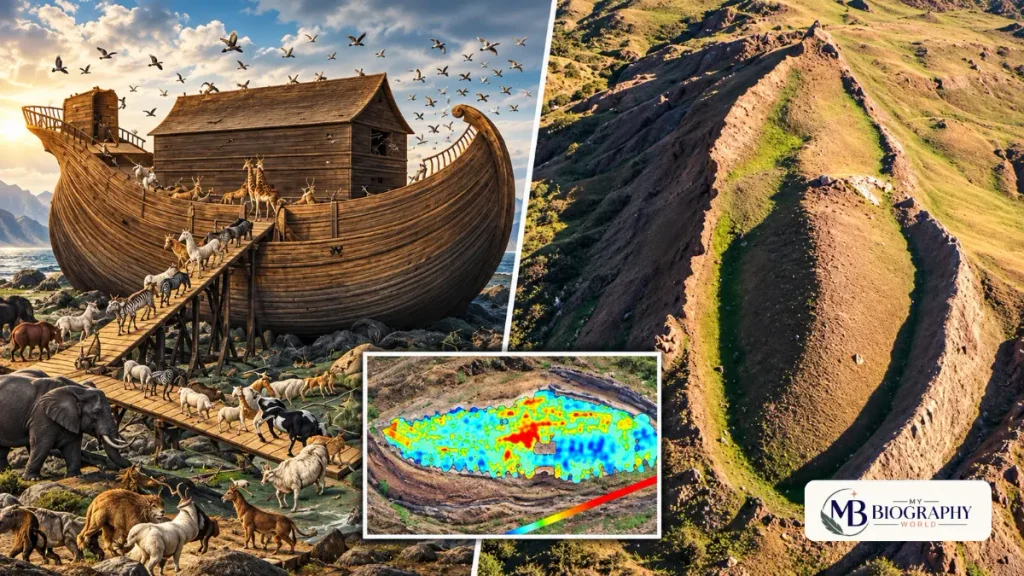
Where Was Noah’s Ark Found?
So, where was Noah’s ark found? The most accurate answer is that no location has been scientifically confirmed as the final resting place of Noah’s Ark. The site most frequently associated with recent discovery claims is the Durupınar formation near Doğubayazıt in eastern Turkey, close to the Mount Ararat region. The site is officially being investigated as a geological formation of interest, but its identification as Noah’s Ark remains unproven.
Other proposed locations exist. Mount Ararat itself has attracted searches for centuries, while Mount Judi or Cudi Dagh has a separate tradition connected to the Qur’anic account. Historical and religious traditions therefore do not provide one universally agreed modern coordinate.
This geographic uncertainty is one of the most important facts for anyone researching the subject. When a headline says “Noah’s Ark found in Turkey,” it may refer to a suspected site rather than an authenticated archaeological discovery. Readers should look for information about the exact site, the type of evidence collected, independent analysis and whether peer-reviewed research supports the interpretation.
Did We Find Noah’s Ark?
The question “did we find Noah’s ark” currently has a more cautious answer than many viral headlines suggest. Researchers have found and investigated an unusual boat-shaped formation in Turkey. They have also reported subsurface anomalies and differences in organic material, and a new officially authorized research project is continuing to analyze the site. But these observations have not established that the formation is Noah’s Ark.
The difference between “interesting evidence” and “confirmed identification” is crucial. Imagine finding a footprint in ancient soil: it may strongly suggest that someone walked there, but you would still need evidence to determine who made it, when they lived and what historical event the footprint belongs to. The same logic applies to an unusual geological formation. A shape that resembles a ship can justify investigation, but it cannot alone establish that an ancient ship created it.
For now, the Durupınar formation remains a candidate site under investigation, not a confirmed archaeological discovery. The research team itself says the project does not authenticate historical or religious claims and describes the findings as requiring further verification.
Frequently Asked Questions About Noah’s Ark
Has Noah’s Ark been found?
No confirmed archaeological discovery has established that Noah’s Ark has been found. The Durupınar formation in eastern Turkey is one of the best-known proposed sites and is currently undergoing renewed scientific investigation. Researchers have reported unusual subsurface structures and differences in organic material, but the available evidence has not demonstrated that the formation is the biblical Ark.
Where was Noah’s Ark found?
No location has been conclusively confirmed as the resting place of Noah’s Ark. The Durupınar formation near Doğubayazıt in eastern Turkey is a prominent candidate in modern searches. Mount Ararat is also traditionally associated with the Ark because Genesis refers to the “mountains of Ararat,” while Islamic tradition identifies al-Judi as the Ark’s resting place.
Was Noah’s Ark found in Turkey?
A boat-shaped geological formation associated with Noah’s Ark was identified in Turkey in 1959. The Durupınar formation has since been investigated by numerous researchers. However, saying that Noah’s Ark was found in Turkey goes beyond what has been scientifically demonstrated. The current Turkish research project is investigating the formation but does not claim that the biblical vessel has been authenticated.
Have they found Noah’s Ark on Mount Ararat?
No scientifically verified remains of Noah’s Ark have been established on Mount Ararat itself. The mountain has been the focus of numerous expeditions, and various reports of wood and unusual formations have appeared throughout modern history. Some reported materials have been dated to periods far later than the traditional biblical timeframe, while other claims remain disputed.
Is the Durupınar formation Noah’s Ark?
The Durupınar formation has not been scientifically established as Noah’s Ark. Some researchers believe its shape and reported subsurface characteristics warrant further investigation. Other geological research has concluded that the structure is naturally formed. The current research project is examining the competing explanations using geological and geophysical methods.
What is the evidence of Noah’s Ark in Turkey?
Reported evidence includes the boat-like shape of the Durupınar formation, radar anomalies, linear and right-angle subsurface features, and differences in organic material found in soil samples. These observations are being investigated, but they do not independently prove the existence of Noah’s Ark. Researchers need to establish whether the features are human-made and determine their age and archaeological context.
Did Google Earth find Noah’s Ark?
Google Earth did not independently discover or authenticate Noah’s Ark. Satellite imagery can display the unusual outline of the Durupınar formation and help people locate the site, but it cannot establish what the formation is made of or when it formed. Ground investigation and laboratory analysis are necessary to determine whether an apparent anomaly has an archaeological explanation.
What remains of Noah’s Ark remains?
There are no universally accepted physical remains that have been demonstrated to belong to Noah’s Ark. Various investigators have reported wood, minerals, geological formations and other potential evidence, but the interpretations remain disputed. Geological research has specifically challenged claims that some features at Durupınar represent manufactured ship components.
Why is Noah’s Ark associated with Mount Ararat?
The association comes primarily from the biblical reference to the “mountains of Ararat.” Over time, this geographical reference became strongly connected with the modern Mount Ararat in eastern Turkey. However, the ancient wording does not explicitly identify today’s Mount Ararat as the exact mountain where the Ark landed, which leaves room for different geographical interpretations.
Is the Noah’s Ark discovery confirmed?
No. The Noah’s Ark discovery has not been confirmed by the archaeological community. The Durupınar formation is being studied through modern geological and geophysical techniques, and researchers expect additional analysis to clarify the site’s origin. Until independently verified evidence demonstrates that the structure is a human-made ancient vessel and connects it to the biblical account, the claim remains unproven.
Conclusion: Is Noah’s Ark Found Yet?
The search for noah’s ark found evidence has entered another interesting phase, particularly because researchers are conducting new investigations at the Durupınar formation in eastern Turkey. The site has a striking boat-like shape and has attracted attention since its identification in 1959. Modern researchers have reported unusual subsurface patterns and differences in organic material, while using GPR, ERT, LiDAR, core sampling and laboratory analysis to investigate the formation.
But has Noah’s Ark been found? Based on the evidence currently available, there is no scientifically established identification of Noah’s Ark. Previous geological research has argued that the Durupınar structure is naturally formed, while the current research program is testing whether additional evidence can explain the site’s unusual characteristics. That means the story is still a research question rather than a settled archaeological discovery.
For anyone asking “have they found Noah’s Ark,” the most responsible answer is therefore: not conclusively. The Durupınar formation is real, the investigation is real, and the reported anomalies are being studied, but the claim that the site contains the remains of Noah’s Ark has not been independently established. Future geological, archaeological and laboratory analysis will determine whether the current evidence changes that assessment.
For the latest news, celebrity biographies, career stories, and entertainment profiles, explore My Biography World.